
GitOps in 2026: Automated, Secure Deployment Pipelines 🔁⚡
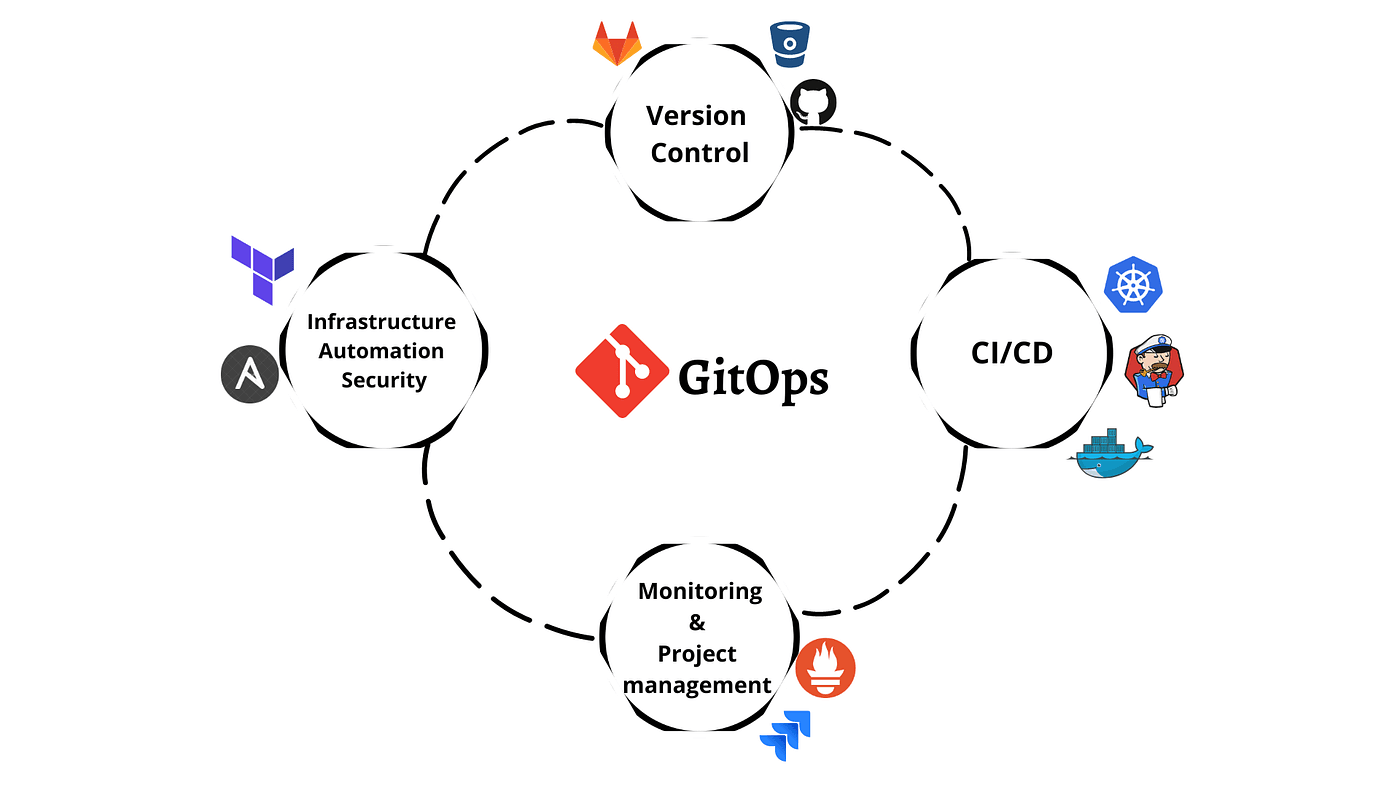
Managing deployments in today’s cloud-native world is getting more complex every year. By 2026, companies are running applications across multiple clouds, regions, and Kubernetes clusters — all while shipping features faster than ever.
This is exactly why GitOps has become the new standard.
🚀 What Is GitOps (Quick Recap)
GitOps is a modern approach to deployments where:
Git acts as the single source of truth for both application and infrastructure configuration.
Any change performed in Git automatically triggers updates in the live environment through automation tools.
Core Ideas of GitOps
- You define everything declaratively
- Git tracks every change with version control
- Automated systems apply and verify the state
- Reproducible rollbacks with a single revert
If it’s not in Git — it is not deployed.
🔥 Why GitOps Is a Must-Have in 2026
Organizations need deployments that are:
- Fast
- Secure
- Repeatable
- Auditable
Traditional pipelines often lead to configuration drift and human errors. GitOps eliminates both by letting the system continuously ensure the environment matches what’s written in Git.
GitOps ensures:
- Faster rollouts
- Lower risk changes
- Clear deployment history
- Minimal manual intervention
🧩 How GitOps Pipelines Work Today
Instead of pushing deployments directly into environments, GitOps uses a pull-based model:
- A developer pushes changes to Git
- A GitOps operator notices the update
- It automatically applies the updated configuration
- It constantly watches for drift and corrects it
Popular GitOps Tools (2026)
- Argo CD and FluxCD for continuous delivery
- Terraform and Pulumi for infrastructure automation
- Kyverno and OPA for policy enforcement
- Prometheus and Grafana for visibility and alerting
This results in fully automated deployments from commit to production.
🛡 GitOps Improves Security By Default
As cyber threats evolve, deployment security must evolve too. GitOps gives organizations:
- Zero direct access to production clusters
- Full audit logs for every deployment change
- Signed and verified commits for trust
- Built-in compliance checks before rollout
- Instant rollbacks when something goes wrong
Security becomes part of the pipeline — not an afterthought.
🤖 AI + GitOps = Smarter Automation
Artificial Intelligence is now powering DevOps tasks:
- Predicting problematic deployments before rollout
- Automatically resolving configuration drifts
- Recommending scaling or failover strategies
- Auto-generating secure configurations
AI removes repeated manual work and lets developers focus on innovation.
🌍 Perfect Fit for Kubernetes & Multi-Cloud
Developers are deploying across:
- AWS
- GCP
- Azure
- On-prem data centers
- Edge networks
GitOps gives teams one unified workflow to manage them all. Code goes to Git → automation syncs everything across the world.
📈 Adoption Is Skyrocketing
Engineering leaders are choosing GitOps because it:
- Shortens release cycles
- Standardizes delivery across teams
- Makes compliance effortless
- Improves developer happiness
By 2026, GitOps has moved from “nice-to-have” to industry standard for scalable applications.
👨💻 How Developers Can Start With GitOps
If you want to learn GitOps in 2026, follow this simple roadmap:
- Understand Kubernetes fundamentals
- Learn Infrastructure as Code (Terraform/Pulumi)
- Store all configs in Git
- Adopt a GitOps tool like Argo CD
- Add policies, secrets management, and monitoring
Then iterate and automate more over time.
🎯 Final Thoughts
GitOps transforms how teams build and ship software:
Automated deployments. Stronger security. Clear visibility. Zero fear of production.
This is the future of DevOps — and it’s already here.
Full-stack developers who embrace GitOps will gain:
- More confidence in shipping quickly
- Less downtime during releases
- Better control over production changes
If you’re pushing code in 2026, you should be pushing to GitOps 🚀
Recommended Posts

How AI Changed Coding — But Not Software Engineering 🤖💻
Click to read the full article and explore more insights into modern development...

Things I Notice Immediately When I Visit a Website as a Developer 👀💻
Click to read the full article and explore more insights into modern development...

Things I Learned After Deploying Real Projects to Production 🚀
Click to read the full article and explore more insights into modern development...