
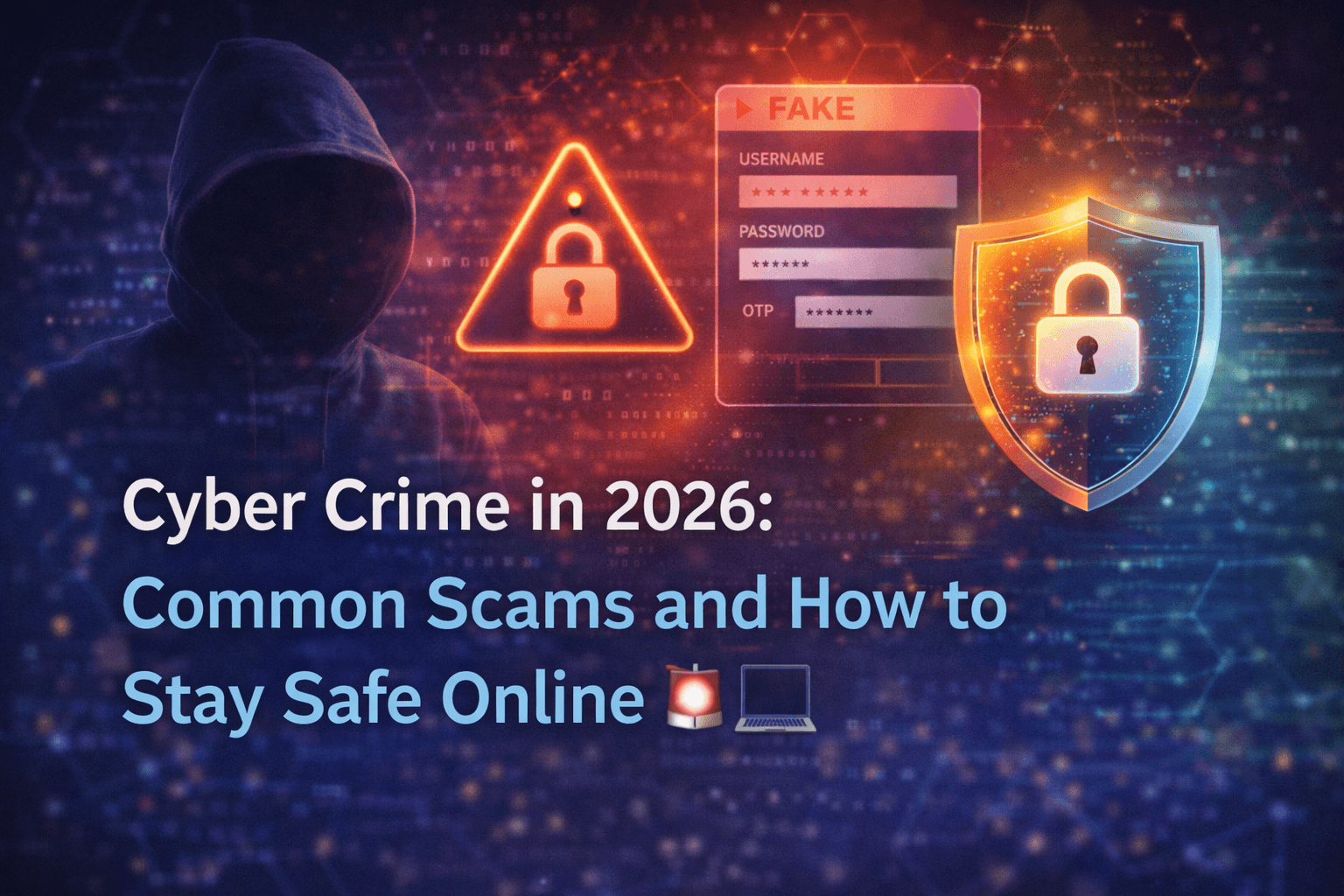
Cyber Crime in 2026: Common Scams and How to Stay Safe Online 🚨💻
The internet has made life easier in countless ways.
We shop, bank, work, and socialize online every day.
But as digital life grows, so does cyber crime.
In 2026, cyber crime is no longer just a “tech problem.”
It’s a real-world issue affecting students, professionals, families, and even small businesses.
As a developer who spends most of my time online, I’ve become more conscious about digital safety. This blog isn’t about fear — it’s about awareness.
Because staying safe online today is as important as locking your door at night.
Why Cyber Crime Is Increasing
Cyber criminals don’t always “hack systems” like in movies.
Most attacks today succeed because of:
- Human mistakes
- Lack of awareness
- Trust exploitation
- Social engineering
It’s often easier to trick a person than break a system.
And that’s exactly what scammers focus on.
Common Cyber Scams Today
1. Phishing Messages
Fake emails or messages that look real.
They may appear to come from:
- Banks
- Delivery companies
- Government portals
- Social media platforms
They usually create urgency like:
“Your account will be blocked”
“Verify immediately”
“Suspicious login detected”
The goal is to make you click fast without thinking.
2. OTP & Banking Frauds
Scammers pretend to be bank officials and ask for OTPs.
Important reminder:
No real bank ever asks for your OTP or PIN.
Sharing it gives full access to your account.
3. Fake Job & Investment Offers
People receive:
- Unrealistic job offers
- Crypto doubling schemes
- “Guaranteed returns” investments
If it sounds too good to be true, it usually is.
4. Social Media Account Takeovers
Attackers trick users into:
- Sharing login links
- Resetting passwords via fake pages
- Clicking malicious ads
Once inside, they scam the victim’s contacts.
5. Deepfake & AI-Based Scams
With AI, scammers can now:
- Clone voices
- Fake video calls
- Impersonate relatives or bosses
This makes verification more important than ever.
How I Personally Stay Safe Online
I follow simple habits:
• I never share OTPs or passwords
• I double-check links before clicking
• I use strong, unique passwords
• I enable two-factor authentication
• I avoid public Wi-Fi for banking
• I verify unexpected requests through calls
These small steps prevent big problems.
Simple Safety Rules Everyone Should Follow
Think Before You Click
Urgent messages are a common trap.
Verify Before You Trust
Call or confirm through official channels.
Update Devices Regularly
Updates fix security vulnerabilities.
Use Password Managers
They help create and store strong passwords.
Educate Family Members
Many victims are less tech-aware users.
Cyber Safety Is a Shared Responsibility
Cyber crime doesn’t only target tech experts.
It often targets everyday people.
The more we talk about it, the safer everyone becomes.
Awareness spreads faster than scams when people share knowledge.
Final Thoughts
The digital world is amazing — but it requires caution.
You don’t need to be a cybersecurity expert to stay safe.
You just need awareness and good habits.
Online safety isn’t about fear.
It’s about being informed.
If this blog helps even one person avoid a scam, it’s worth writing.
Stay safe. Stay smart. Stay aware. 🚀
Recommended Posts

How AI Changed Coding — But Not Software Engineering 🤖💻
Click to read the full article and explore more insights into modern development...

Things I Notice Immediately When I Visit a Website as a Developer 👀💻
Click to read the full article and explore more insights into modern development...

Things I Learned After Deploying Real Projects to Production 🚀
Click to read the full article and explore more insights into modern development...