
Top JavaScript Frameworks to Learn in 2025
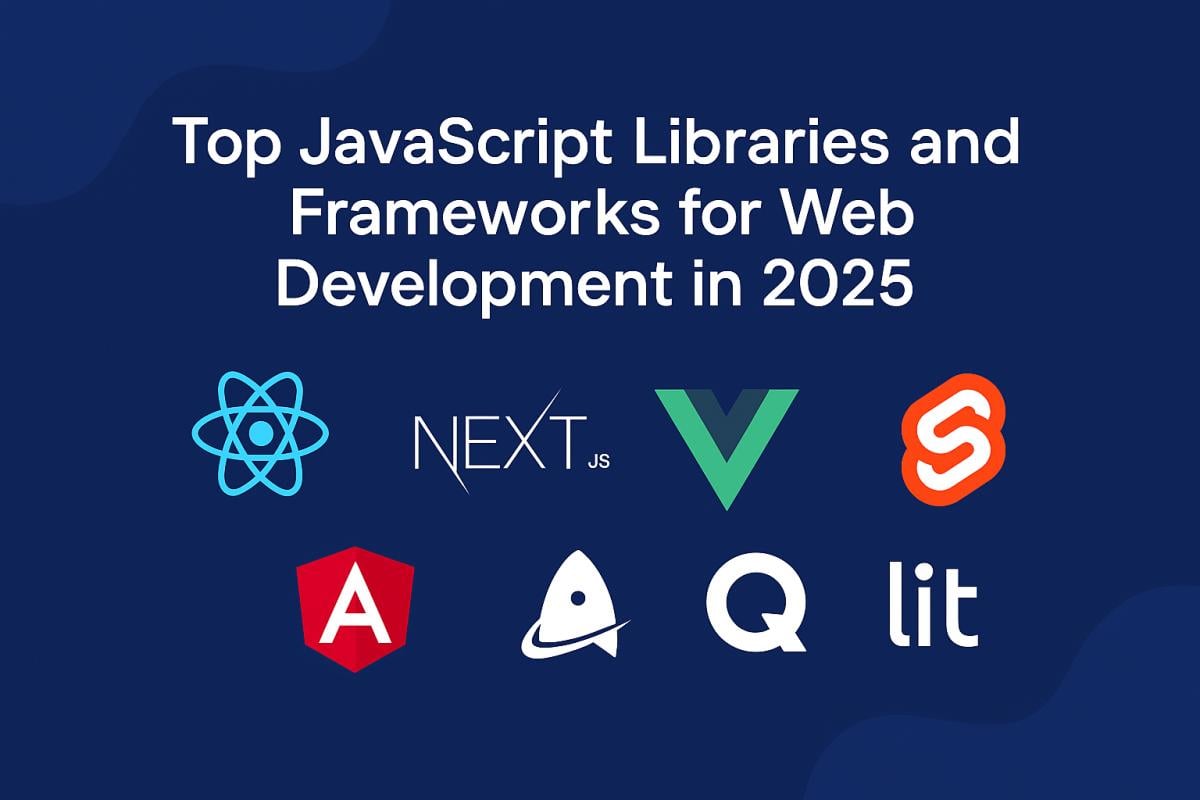
The JavaScript ecosystem keeps evolving at lightning speed.
Each year brings new tools, frameworks, and innovations that reshape how we build web applications.
In 2025, the focus is on performance, developer experience, and AI integration — and these frameworks are leading the charge.
⚛️ 1. Next.js 15 — The All-in-One Powerhouse
Next.js continues to dominate the web development scene in 2025.
With React 19 and Server Actions, it delivers a perfect mix of speed, flexibility, and simplicity.
Key Highlights:
- Built-in support for streaming SSR and React Compiler (React Forget)
- Integrated AI APIs for building smart features
- Enhanced Edge Functions and ISR (Incremental Static Regeneration)
Next.js 15 is ideal for full-scale production apps — from startups to enterprise-level SaaS platforms.
⚡ 2. Astro — The Future of Content-Driven Websites
Astro shines for static and content-heavy websites.
Its islands architecture loads only the JavaScript you need, resulting in ultra-fast performance.
Why It’s Popular:
- Perfect for blogs, portfolios, and documentation sites
- Integrates seamlessly with React, Vue, or Svelte components
- Ships near-zero JS by default, improving Core Web Vitals
Astro’s focus on simplicity and performance makes it a go-to for modern static websites in 2025.
🧩 3. Svelte 5 — Simplicity Meets Power
Svelte 5 has taken a huge leap with its new Runes API, improving reactivity and developer experience.
Unlike traditional frameworks, Svelte compiles components at build time — meaning no runtime overhead.
Why Developers Love It:
- Minimal boilerplate and lightning-fast apps
- Reactive syntax is intuitive and clean
- Perfect for lightweight SPAs and dashboards
In 2025, Svelte is gaining serious traction among developers who value performance and elegant code.
🏗️ 4. Remix — The Framework for the Edge
Remix focuses on server-first rendering and data-driven routing, making it perfect for dynamic apps and real-time experiences.
Backed by Shopify, it’s designed to run efficiently on edge networks.
Key Strengths:
- Optimized for progressive enhancement
- Built-in form handling and nested routing
- Works seamlessly with modern hosting like Vercel and Cloudflare Workers
For developers who care about fast responses and great UX, Remix remains a strong contender in 2025.
🌐 5. Qwik — Designed for Instant Loading
Qwik has introduced a completely new paradigm — resumability.
Instead of rehydrating the app on load, Qwik resumes where the server left off, drastically improving performance.
Why It Stands Out:
- Ultra-fast first load and minimal JS footprint
- Excellent for high-performance SPAs
- Backed by the team behind Builder.io
As apps get larger, Qwik’s approach to speed makes it one of the most promising frameworks this year.
🧱 6. Solid.js — Performance-First Framework
Solid.js may not be as mainstream as React yet, but its performance is unmatched.
It uses fine-grained reactivity without a virtual DOM, offering faster updates and smaller bundles.
Solid.js Advantages:
- Incredible rendering speed
- Familiar JSX syntax
- Ideal for real-time apps and micro frontends
Solid.js has become the go-to choice for developers chasing maximum performance in 2025.
🚀 Final Thoughts
Choosing the right JavaScript framework depends on your goals —
- Next.js for full-stack web apps
- Astro for static sites
- Svelte and Qwik for speed and simplicity
- Remix and Solid.js for edge and reactive experiences
In 2025, the trend is clear — frameworks that prioritize performance, scalability, and developer experience are here to stay.
No matter which one you pick, JavaScript continues to evolve — and staying updated is the real competitive edge.
Recommended Posts

How AI Changed Coding — But Not Software Engineering 🤖💻
Click to read the full article and explore more insights into modern development...

Things I Notice Immediately When I Visit a Website as a Developer 👀💻
Click to read the full article and explore more insights into modern development...

Things I Learned After Deploying Real Projects to Production 🚀
Click to read the full article and explore more insights into modern development...